This is a good rant against the trans fat industry.
There is a restaurant lobbying group "Center for Consumer Freedom" supplying the propaganda -- "funded by the restaurant and food industries to "promote personal responsibility and protect consumer choices" from a "cabal of food cops,' health care enforcers, militant activists, meddling bureaucrats and violent radicals"
The industries have done quite a job to convince people that for the government to regulate anything - like terribly unhealthy things - is some kind of transgression against us. Instead of people having the right expect that what is sold to us - is not poisonous (deadly even) - under the guise of being "food".
It's become part of the "Liberals are bad" meme. So the people who think that everyone should be protected from poisonous profits - become the bad guys ?. It's the same sort of argument (logic?) and lack of action that is responsible for power plants not using existing technologies that reduce pollution by 90%. It's the environmentalists who care about people's health that are bad. That's just crazy.
If consumers are duped into buying unhealthy things - that's supposed to be their own fault, apparently. Even if that is all that is available (like if all the restaurants use it) - even when the unhealthy things do not have to be labeled as such. And if the government allows pollution and poisonous things in the environment - and people don't get the health care they need to address the resulting illnesses - that's the people's fault too. At least - that's how it works in the anti-liberal (pro-corporate) world.
Let's transcend an unhealthy habit
....trans fat is actually one of those "better living through chemistry" food additives that seemed like a good idea at the time. And guess what. Time's up.
Artificial trans fat, which is short for trans-fatty acids, is a type of fat made when liquid vegetable oils are transformed into solids such as shortening or margarine. It's listed on food labels as partially hydrogenated oil, and it's used for frying and baking.
It was invented about 100 years ago but didn't really catch on until the 1940s. Its use spiked sharply from the 1960s through the 1990s because of processed convenience foods and fast food and concerns about saturated fat. Manufacturers liked it, because it extended the shelf life of products and cost less than the oils and fats it had replaced.
Unlike other fats, however, it has no nutritional benefit. Worse, it causes problems.
It's linked to obesity, because it can lead to more rapid weight gain than other fats. Numerous studies have found it raises levels of LDL, or "bad cholesterol," and lowers HDL, "good cholesterol," linking it to heart disease. Other studies show links to diabetes, poor liver function, some types of cancer and neurological problems including memory loss.
"New Yorkers are consuming a hazardous artificial substance without their knowledge or consent," the city's health commissioner said. "Like lead in paint, artificial trans fat in food is invisible and dangerous. While it may take some effort, restaurants can replace trans fat without changing the taste or cost of food. No one will miss it when it's gone."
But some think they will. Or they resent what they call the "nanny state" intruding into their lives, treating people like children and even stripping away "one more constitutionally guaranteed liberty." The New Jersey legislator who proposed a trans fat ban last week received death threats...
The choice and freedom here belong to producers, not consumers -- and producers can choose healthier alternatives. Wendy's announced in August that it was the first national fast-food chain to switch to cooking oils without trans fats. Dunkin' Donuts, Ruby Tuesday, Panera and other smaller chains have done the same. Kraft took trans fat out of Oreos. Frito-Lay removed it from Doritos and Cheetos. Crisco has shortening free of it.
For some reason, however, people who don't mind government meat inspections or who gladly accept the monitoring of phone calls, Internet use and financial transactions can be convinced their liberty is at stake if they can't blindly eat slop. Or blow smoke in somebody's face in a restaurant, for that matter, to bring up a hot-button issue of "consumer choice" in Ohio.
It's a strange way to look at freedom: Give me doughnuts, or give me death.
Guess what? You can have both.
Monday, November 06, 2006


Australia - Worst Drought > 200 1000 years
Global Warming is becoming more of a political issue - as people see that a government's lack of response can be a contributing factor. People expect leadership out of leaders/legislators - people who are in a position to make Kyoto type agreements, require better gas mileage from manufacturers, provide funding and incentives for alternative, cleaner energy systems, etc. Not that citizens aren't doing things individually - but when global warming is understood to be caused by people - that requires that large groups of people make changes. We don't need leaders who are making it worse - causing more harm with no solutions, no incentives, no requirements or expectations from themselves, from industry or from the public at large.
Australia calls drought summit as economy threatened
Australian Prime Minister John Howard Sunday called an emergency drought summit as climate change and rising interest rates threaten a 10-year economic boom -- and his grip on power.
Shaping up as the worst drought since white settlement more than 200 years ago, the "big dry" is likely to cut agricultural output by 20 percent and GDP by around 0.7 percent, government officials say.
"The prolonged drought is having a terrible impact on farming communities across Australia," Howard said...
With an electorate increasingly ready to blame the drought on global warming, Howard has abandoned his previously sceptical response to the idea that pollution is driving climate change and has announced a series of "clean energy" initiatives.
Howard's announcement of a drought summit came as statistics showed that the country's most significant river system, in the Murray-Darling Basin, was at historic lows after six years of drought.
About 30 rivers and hundreds of tributaries run across the basin, which provides for about 70 percent of Australia's irrigated farmlands....
Update 11/7
Drought declared 'worst in millennium'
The drought has been declared the worst in a thousand years, but a crisis summit on the Murray-Darling Basin delivered little help for the parched river system.
Inflows to the river this year - already the lowest on record - were 54 per cent below the previous minimum, Mr Dreverman said.
"It's more typical of a one in a thousand year (drought), or possibly even drier, than it is of a one in a hundred year event," he told AAP....
"I made the comment trying to get the message that what we're going through is not just the driest we've ever had, this year - in the five months to the end of October - it's the driest we've ever had by about 54 per cent."
"What we're seeing with this drought is a frightening glimpse of the future with global warming," he said....
Further update:
Australian Farmers Commit Suicide as Hope Evaporates :(
One Australian farmer commits suicide every four days, defeated by the country's worst drought in 100 years which has left them with dust-bowl paddocks and a mountain of debt, says a national mental health body.
Australia calls drought summit as economy threatened
Australian Prime Minister John Howard Sunday called an emergency drought summit as climate change and rising interest rates threaten a 10-year economic boom -- and his grip on power.
Shaping up as the worst drought since white settlement more than 200 years ago, the "big dry" is likely to cut agricultural output by 20 percent and GDP by around 0.7 percent, government officials say.
"The prolonged drought is having a terrible impact on farming communities across Australia," Howard said...
With an electorate increasingly ready to blame the drought on global warming, Howard has abandoned his previously sceptical response to the idea that pollution is driving climate change and has announced a series of "clean energy" initiatives.
Howard's announcement of a drought summit came as statistics showed that the country's most significant river system, in the Murray-Darling Basin, was at historic lows after six years of drought.
About 30 rivers and hundreds of tributaries run across the basin, which provides for about 70 percent of Australia's irrigated farmlands....
Update 11/7
Drought declared 'worst in millennium'
The drought has been declared the worst in a thousand years, but a crisis summit on the Murray-Darling Basin delivered little help for the parched river system.
Inflows to the river this year - already the lowest on record - were 54 per cent below the previous minimum, Mr Dreverman said.
"It's more typical of a one in a thousand year (drought), or possibly even drier, than it is of a one in a hundred year event," he told AAP....
"I made the comment trying to get the message that what we're going through is not just the driest we've ever had, this year - in the five months to the end of October - it's the driest we've ever had by about 54 per cent."
"What we're seeing with this drought is a frightening glimpse of the future with global warming," he said....
Further update:
Australian Farmers Commit Suicide as Hope Evaporates :(
One Australian farmer commits suicide every four days, defeated by the country's worst drought in 100 years which has left them with dust-bowl paddocks and a mountain of debt, says a national mental health body.
Sunday, November 05, 2006
Fish Oil Miracles
I thought this was pretty interesting.
Of course people are responsible for what they eat - "you are what you eat" and all - but a lot of people might not know about Omega-3s.
_____________________________________________
Omega-3, junk food and the link between violence and what we eat
Research with British and US offenders suggests nutritional deficiencies may play a key role in aggressive bevaviour.
That Dwight Demar is able to sit in front of us, sober, calm, and employed, is "a miracle", he declares in the cadences of a prayer-meeting sinner. He has been rocking his 6ft 2in bulk to and fro while delivering a confessional account of his past into the middle distance. He wants us to know what has saved him after 20 years on the streets: "My dome is working. They gave me some kind of pill and I changed. Me, myself and I, I changed."
Demar has been in and out of prison so many times he has lost count of his convictions. "Being drunk, being disorderly, trespass, assault and battery; you name it, I did it. How many times I been in jail? I don't know, I was locked up so much it was my second home."
Demar has been taking part in a clinical trial at the US government's National Institutes for Health, near Washington. The study is investigating the effects of omega-3 fatty acid supplements on the brain, and the pills that have effected Demar's "miracle" are doses of fish oil.
...The UK prison trial at Aylesbury jail showed that when young men there were fed multivitamins, minerals and essential fatty acids, the number of violent offences they committed in the prison fell by 37%. Although no one is suggesting that poor diet alone can account for complex social problems, the former chief inspector of prisons Lord Ramsbotham says that he is now "absolutely convinced that there is a direct link between diet and antisocial behaviour, both that bad diet causes bad behaviour and that good diet prevents it."
Deficiency
For the clinician in charge of the US study, Joseph Hibbeln, the results of his trial are not a miracle, but simply what you might predict if you understand the biochemistry of the brain and the biophysics of the brain cell membrane. His hypothesis is that modern industrialised diets may be changing the very architecture and functioning of the brain.
We are suffering, he believes, from widespread diseases of deficiency. Just as vitamin C deficiency causes scurvy, deficiency in the essential fats the brain needs and the nutrients needed to metabolise those fats is causing of a host of mental problems from depression to aggression. Not all experts agree, but if he is right, the consequences are as serious as they could be. The pandemic of violence in western societies may be related to what we eat or fail to eat. Junk food may not only be making us sick, but mad and bad too....
The researchers at the National Institute on Alcohol Abuse and Alcoholism, which is part of NIH, had placed adverts for aggressive alcoholics in the Washington Post in 2001. Some 80 volunteers came forward and have since been enrolled in the double blind study. They have ranged from homeless people to a teacher to a former secret service agent. Following a period of three weeks' detoxification on a locked ward, half were randomly assigned to 2 grams per day of the omega-3 fatty acids EPA and DHA for three months, and half to placebos of fish-flavoured corn oil.
An earlier pilot study on 30 patients with violent records found that those given omega-3 supplements had their anger reduced by one-third, measured by standard scales of hostility and irritability, regardless of whether they were relapsing and drinking again. The bigger trial is nearly complete now and Dell Wright, the nurse administering the pills, has seen startling changes in those on the fish oil rather than the placebo. "When Demar came in there was always an undercurrent of aggression in his behaviour. Once he was on the supplements he took on the ability not to be impulsive. He kept saying, 'This is not like me'."
...Over the last century most western countries have undergone a dramatic shift in the composition of their diets in which the omega-3 fatty acids that are essential to the brain have been flooded out by competing omega-6 fatty acids, mainly from industrial oils such as soya, corn, and sunflower. In the US, for example, soya oil accounted for only 0.02% of all calories available in 1909, but by 2000 it accounted for 20%. Americans have gone from eating a fraction of an ounce of soya oil a year to downing 25lbs (11.3kg) per person per year in that period. In the UK, omega-6 fats from oils such as soya, corn, and sunflower accounted for 1% of energy supply in the early 1960s, but by 2000 they were nearly 5%. These omega-6 fatty acids come mainly from industrial frying for takeaways, ready meals and snack foods such as crisps, chips, biscuits, ice-creams and from margarine. Alcohol, meanwhile, depletes omega-3s from the brain.
To test the hypothesis, Hibbeln and his colleagues have mapped the growth in consumption of omega-6 fatty acids from seed oils in 38 countries since the 1960s against the rise in murder rates over the same period. In all cases there is an unnerving match. As omega-6 goes up, so do homicides in a linear progression. Industrial societies where omega-3 consumption has remained high and omega-6 low because people eat fish, such as Japan, have low rates of murder and depression.
Of course, all these graphs prove is that there is a striking correlation between violence and omega 6-fatty acids in the diet. They don't prove that high omega-6 and low omega-3 fat consumption actually causes violence. Moreover, many other things have changed in the last century and been blamed for rising violence - exposure to violence in the media, the breakdown of the family unit and increased consumption of sugar, to take a few examples. But some of the trends you might expect to be linked to increased violence - such as availability of firearms and alcohol, or urbanisation - do not in fact reliably predict a rise in murder across countries, according to Hibbeln.
...Essential fatty acids are called essential because humans cannot make them but must obtain them from the diet. The brain is a fatty organ - it's 60% fat by dry weight, and the essential fatty acids are what make part of its structure, making up 20% of the nerve cells' membranes. The synapses, or junctions where nerve cells connect with other nerve cells, contain even higher concentrations of essential fatty acids - being made of about 60% of the omega-3 fatty acid DHA.
Communication between the nerve cells depends on neurotransmitters, such as serotonin and dopamine, docking with receptors in the nerve cell membrane.
Omega-3 DHA is very long and highly flexible. When it is incorporated into the nerve cell membrane it helps make the membrane itself elastic and fluid so that signals pass through it efficiently. But if the wrong fatty acids are incorporated into the membrane, the neurotransmitters can't dock properly. We know from many other studies what happens when the neurotransmitter systems don't work efficiently. Low serotonin levels are known to predict an increased risk of suicide, depression and violent and impulsive behaviour. And dopamine is what controls the reward processes in the brain.
Laboratory tests at NIH have shown that the composition of tissue and in particular of the nerve cell membrane of people in the US is different from that of the Japanese, who eat a diet rich in omega-3 fatty acids from fish. Americans have cell membranes higher in the less flexible omega-6 fatty acids, which appear to have displaced the elastic omega-3 fatty acids found in Japanese nerve cells.
Hibbeln's theory is that because the omega-6 fatty acids compete with the omega-3 fatty acids for the same metabolic pathways, when omega-6 dominates in the diet, we can't convert the omega-3s to DHA and EPA, the longer chain versions we need for the brain. What seems to happen then is that the brain picks up a more rigid omega-6 fatty acid DPA instead of DHA to build the cell membranes - and they don't function so well.
Other experts blame the trans fats produced by partial hydrogenation of industrial oils for processed foods. Trans fats have been shown to interfere with the synthesis of essentials fats in foetuses and infants. Minerals such as zinc and the B vitamins are needed to metabolise essential fats, so deficiencies in these may be playing an important part too.
There is also evidence that deficiencies in DHA/EPA at times when the brain is developing rapidly - in the womb, in the first 5 years of life and at puberty - can affect its architecture permanently. Animal studies have shown that those deprived of omega-3 fatty acids over two generations have offspring who cannot release dopamine and serotonin so effectively.
"The extension of all this is that if children are left with low dopamine as a result of early deficits in their own or their mother's diets, they cannot experience reward in the same way and they cannot learn from reward and punishment. If their serotonin levels are low, they cannot inhibit their impulses or regulate their emotional responses," Hibbeln points out....
(More about the prison trial/previous diet at link)
Of course people are responsible for what they eat - "you are what you eat" and all - but a lot of people might not know about Omega-3s.
_____________________________________________
Omega-3, junk food and the link between violence and what we eat
Research with British and US offenders suggests nutritional deficiencies may play a key role in aggressive bevaviour.
That Dwight Demar is able to sit in front of us, sober, calm, and employed, is "a miracle", he declares in the cadences of a prayer-meeting sinner. He has been rocking his 6ft 2in bulk to and fro while delivering a confessional account of his past into the middle distance. He wants us to know what has saved him after 20 years on the streets: "My dome is working. They gave me some kind of pill and I changed. Me, myself and I, I changed."
Demar has been in and out of prison so many times he has lost count of his convictions. "Being drunk, being disorderly, trespass, assault and battery; you name it, I did it. How many times I been in jail? I don't know, I was locked up so much it was my second home."
Demar has been taking part in a clinical trial at the US government's National Institutes for Health, near Washington. The study is investigating the effects of omega-3 fatty acid supplements on the brain, and the pills that have effected Demar's "miracle" are doses of fish oil.
...The UK prison trial at Aylesbury jail showed that when young men there were fed multivitamins, minerals and essential fatty acids, the number of violent offences they committed in the prison fell by 37%. Although no one is suggesting that poor diet alone can account for complex social problems, the former chief inspector of prisons Lord Ramsbotham says that he is now "absolutely convinced that there is a direct link between diet and antisocial behaviour, both that bad diet causes bad behaviour and that good diet prevents it."
Deficiency
For the clinician in charge of the US study, Joseph Hibbeln, the results of his trial are not a miracle, but simply what you might predict if you understand the biochemistry of the brain and the biophysics of the brain cell membrane. His hypothesis is that modern industrialised diets may be changing the very architecture and functioning of the brain.
We are suffering, he believes, from widespread diseases of deficiency. Just as vitamin C deficiency causes scurvy, deficiency in the essential fats the brain needs and the nutrients needed to metabolise those fats is causing of a host of mental problems from depression to aggression. Not all experts agree, but if he is right, the consequences are as serious as they could be. The pandemic of violence in western societies may be related to what we eat or fail to eat. Junk food may not only be making us sick, but mad and bad too....
The researchers at the National Institute on Alcohol Abuse and Alcoholism, which is part of NIH, had placed adverts for aggressive alcoholics in the Washington Post in 2001. Some 80 volunteers came forward and have since been enrolled in the double blind study. They have ranged from homeless people to a teacher to a former secret service agent. Following a period of three weeks' detoxification on a locked ward, half were randomly assigned to 2 grams per day of the omega-3 fatty acids EPA and DHA for three months, and half to placebos of fish-flavoured corn oil.
An earlier pilot study on 30 patients with violent records found that those given omega-3 supplements had their anger reduced by one-third, measured by standard scales of hostility and irritability, regardless of whether they were relapsing and drinking again. The bigger trial is nearly complete now and Dell Wright, the nurse administering the pills, has seen startling changes in those on the fish oil rather than the placebo. "When Demar came in there was always an undercurrent of aggression in his behaviour. Once he was on the supplements he took on the ability not to be impulsive. He kept saying, 'This is not like me'."
...Over the last century most western countries have undergone a dramatic shift in the composition of their diets in which the omega-3 fatty acids that are essential to the brain have been flooded out by competing omega-6 fatty acids, mainly from industrial oils such as soya, corn, and sunflower. In the US, for example, soya oil accounted for only 0.02% of all calories available in 1909, but by 2000 it accounted for 20%. Americans have gone from eating a fraction of an ounce of soya oil a year to downing 25lbs (11.3kg) per person per year in that period. In the UK, omega-6 fats from oils such as soya, corn, and sunflower accounted for 1% of energy supply in the early 1960s, but by 2000 they were nearly 5%. These omega-6 fatty acids come mainly from industrial frying for takeaways, ready meals and snack foods such as crisps, chips, biscuits, ice-creams and from margarine. Alcohol, meanwhile, depletes omega-3s from the brain.
To test the hypothesis, Hibbeln and his colleagues have mapped the growth in consumption of omega-6 fatty acids from seed oils in 38 countries since the 1960s against the rise in murder rates over the same period. In all cases there is an unnerving match. As omega-6 goes up, so do homicides in a linear progression. Industrial societies where omega-3 consumption has remained high and omega-6 low because people eat fish, such as Japan, have low rates of murder and depression.
Of course, all these graphs prove is that there is a striking correlation between violence and omega 6-fatty acids in the diet. They don't prove that high omega-6 and low omega-3 fat consumption actually causes violence. Moreover, many other things have changed in the last century and been blamed for rising violence - exposure to violence in the media, the breakdown of the family unit and increased consumption of sugar, to take a few examples. But some of the trends you might expect to be linked to increased violence - such as availability of firearms and alcohol, or urbanisation - do not in fact reliably predict a rise in murder across countries, according to Hibbeln.
...Essential fatty acids are called essential because humans cannot make them but must obtain them from the diet. The brain is a fatty organ - it's 60% fat by dry weight, and the essential fatty acids are what make part of its structure, making up 20% of the nerve cells' membranes. The synapses, or junctions where nerve cells connect with other nerve cells, contain even higher concentrations of essential fatty acids - being made of about 60% of the omega-3 fatty acid DHA.
Communication between the nerve cells depends on neurotransmitters, such as serotonin and dopamine, docking with receptors in the nerve cell membrane.
Omega-3 DHA is very long and highly flexible. When it is incorporated into the nerve cell membrane it helps make the membrane itself elastic and fluid so that signals pass through it efficiently. But if the wrong fatty acids are incorporated into the membrane, the neurotransmitters can't dock properly. We know from many other studies what happens when the neurotransmitter systems don't work efficiently. Low serotonin levels are known to predict an increased risk of suicide, depression and violent and impulsive behaviour. And dopamine is what controls the reward processes in the brain.
Laboratory tests at NIH have shown that the composition of tissue and in particular of the nerve cell membrane of people in the US is different from that of the Japanese, who eat a diet rich in omega-3 fatty acids from fish. Americans have cell membranes higher in the less flexible omega-6 fatty acids, which appear to have displaced the elastic omega-3 fatty acids found in Japanese nerve cells.
Hibbeln's theory is that because the omega-6 fatty acids compete with the omega-3 fatty acids for the same metabolic pathways, when omega-6 dominates in the diet, we can't convert the omega-3s to DHA and EPA, the longer chain versions we need for the brain. What seems to happen then is that the brain picks up a more rigid omega-6 fatty acid DPA instead of DHA to build the cell membranes - and they don't function so well.
Other experts blame the trans fats produced by partial hydrogenation of industrial oils for processed foods. Trans fats have been shown to interfere with the synthesis of essentials fats in foetuses and infants. Minerals such as zinc and the B vitamins are needed to metabolise essential fats, so deficiencies in these may be playing an important part too.
There is also evidence that deficiencies in DHA/EPA at times when the brain is developing rapidly - in the womb, in the first 5 years of life and at puberty - can affect its architecture permanently. Animal studies have shown that those deprived of omega-3 fatty acids over two generations have offspring who cannot release dopamine and serotonin so effectively.
"The extension of all this is that if children are left with low dopamine as a result of early deficits in their own or their mother's diets, they cannot experience reward in the same way and they cannot learn from reward and punishment. If their serotonin levels are low, they cannot inhibit their impulses or regulate their emotional responses," Hibbeln points out....
(More about the prison trial/previous diet at link)
Kenya - UN conference on Global Warming
On continent at greatest risk, thousands gather in Kenya to weigh next steps on climate
Government officials, scientists and activists from around the world converged on drought-stricken Kenya for Monday's opening of the U.N. conference on climate change, the first such session in sub-Saharan Africa, the continent at greatest risk as the world warms.
A U.N. report Sunday forecast a dire future if global temperatures continue to rise.
One-third of Africa's species may lose their habitats by 2085 as climate zones shift, it said. In some areas, 30 percent of coastal infrastructure may be wrecked by rising seas. On the world's hungriest continent, cereal crop yields are projected to decline.
The U.N. Environment Program chief sees an issue of basic fairness.
"The problem was not caused on the Africa continent, and yet it's Africa that has to adapt," Achim Steiner told a news conference.
A leading African environmentalist was more blunt.
"It's the luxury emissions of the United States versus our survival emissions," Grace Akumu, of Climate Network Africa, told The Associated Press....
Many experts are saying industrialized nations must cut emissions by as much as 80 percent by mid-century to head off temperature increases as high as 5.8 degrees Celsius (10 degrees Fahrenheit) by the end of this century....
Meanwhile:
10,000 rally in UK over climate change
Thousands of environmental campaigners have rallied in London ahead of international talks on climate change in Kenya, demanding that world leaders act to curb global warming.
The event included a march from the United States embassy in protest against US President George W Bush's refusal to ratify the Kyoto Protocol on cutting climate-warming gases from fossil fuels.
Police said around 10,000 people, including 450 cyclists, had gathered in Trafalgar Square in the capital's centre.
"People have realised that climate change is a humanitarian issue, a peace-and-security issue, an economic issue, as much as it is a green issue," Ashok Sin.
Government officials, scientists and activists from around the world converged on drought-stricken Kenya for Monday's opening of the U.N. conference on climate change, the first such session in sub-Saharan Africa, the continent at greatest risk as the world warms.
A U.N. report Sunday forecast a dire future if global temperatures continue to rise.
One-third of Africa's species may lose their habitats by 2085 as climate zones shift, it said. In some areas, 30 percent of coastal infrastructure may be wrecked by rising seas. On the world's hungriest continent, cereal crop yields are projected to decline.
The U.N. Environment Program chief sees an issue of basic fairness.
"The problem was not caused on the Africa continent, and yet it's Africa that has to adapt," Achim Steiner told a news conference.
A leading African environmentalist was more blunt.
"It's the luxury emissions of the United States versus our survival emissions," Grace Akumu, of Climate Network Africa, told The Associated Press....
Many experts are saying industrialized nations must cut emissions by as much as 80 percent by mid-century to head off temperature increases as high as 5.8 degrees Celsius (10 degrees Fahrenheit) by the end of this century....
Meanwhile:
10,000 rally in UK over climate change
Thousands of environmental campaigners have rallied in London ahead of international talks on climate change in Kenya, demanding that world leaders act to curb global warming.
The event included a march from the United States embassy in protest against US President George W Bush's refusal to ratify the Kyoto Protocol on cutting climate-warming gases from fossil fuels.
Police said around 10,000 people, including 450 cyclists, had gathered in Trafalgar Square in the capital's centre.
"People have realised that climate change is a humanitarian issue, a peace-and-security issue, an economic issue, as much as it is a green issue," Ashok Sin.
Chaos Theory in Iraq
From the Asia Times. This article may be simplified - but I think it's a good assesment of what's going on over there.
Iraq: Bush has a plan, and it's working
"If you listen carefully for a Democrat plan for success, they don't have one. Iraq is the central front in the war on terror, yet they don't have a plan ..."
- US President George W Bush, campaigning for Republicans in next week's congressional elections.
So, does the Bush administration have a plan for Iraq, and if so, is it working? The answer to both questions could well be "yes". But it's not a plan that Bush could publicly boast about, despite the fact that it's working like a charm.
This is how things are shaping up in Iraq, according to US Central Command itself, which keeps a "chaos gauge" to measure Iraq's progress from chaos to peace.

According to the New York Times, the "gauge" was shown as a slide at a classified briefing on October 18. Unfortunately for the benighted Iraqis, the gauge is moving steadily in the "wrong" direction: away from peace and into the "red zone" of chaos. So how is it that the Bush plan can be said to be working? Easy, if the plan is ... chaos. Asia Times Online columnist Spengler has pointed out that chaos is probably the best option for the Bush administration, not only in Iraq but in the region (see How I learned to stop worrying and love chaos, March 14, 2006, and Mistah Kurtz, he clueless, May 11, 2004). Mark LeVine writes (The chaos theory in action, April 6, 2004): "It is chaos that makes this whole [post-invasion Iraqi] system possible. Without the chaos, Iraqis would not allow the country to be sold off wholesale, or allow the US troops to remain after the June 30 'transfer' of sovereignty."
A strategy of fomenting chaos makes perfect sense in a twisted sort of way: a stable, autonomous Iraq means oil will be pumped, bringing down international crude prices, and that's the last thing the Bush administration's backers want.
Who are the administration's backers, and who has a hotline to the presidency, via Vice President Dick Cheney? Big Oil. Consider these well-known facts:
• Cheney was formerly chief executive officer of oil-services company Halliburton, which, incidentally, was found by a 2003 Pentagon audit to have overcharged the US government by US$61 million for delivering gasoline to Iraq.
Secretary of State Condoleezza Rice sat on Chevron's board of directors from 1991 to 2001, and Chevron named an oil tanker after her.
• James A Baker III, secretary of state for Bush's father and now "fixer" for the Bush family, has been appointed co-chair of the Iraq Study Group, charged with advising Bush Jr on future Iraq policy. His law firm, Baker Botts, was ranked by Who's Who Legal last year as "Global Oil and Gas Law Firm of the Year". His clients include the royal family of Organization of Petroleum Exporting Countries kingpin Saudi Arabia.
• Bush himself was a Texas oilman, though not a very successful one. Ever heard of Bush's company, Arbusto? Probably not. Arbusto was going busto before it eventually ended up in the hands of Harken Energy in 1986. Harken gave Bush a seat on the board, some stock options and a $120,000 consulting contract. The energy industry pumped $2.8 million into Bush's 2000 campaign.
• Consider too that oil-industry behemoth ExxonMobil this week announced third-quarter earnings of $10.49 billion, largely on the backs of US consumers paying high prices for oil. This is the second-biggest quarterly profit ever recorded by a publicly traded US company.
Better not brag about your plan before the elections, Mr President.
______________________________
Also - Saddam Hussein was sentenced to death today - prompting speculation about the verdict creating more chaos in Iraq.
The trial of Saddam Hussein was supposed to mark an important moment in a process of turning Iraq from dictatorship to the rule of law. However, it might turn out to be just another event in the catalogue of chaos that has engulfed the country.
And from Juan Cole:
The Daily Telegraph reports that the death verdict against Saddam Hussein announced Sunday has sharpened further Iraq's already parlous ethnic tensions. Shiites in Sadr City, once viciously repressed by Saddam, erupted in celebrations of joy, including celebratory fire. NBC news is reporting some protests by Sunnis in the capital.
Riverbend, from Iraq - Baghdad Burning - posted about the verdict as well, today.
...Iraq saw demonstrations against and for the verdict. The pro-Saddam demonstrators were attacked by the Iraqi army. This is how free our media is today: the channels that were showing the pro-Saddam demonstrations have been shut down. Iraqi security forces promptly raided them.Welcome to the new Iraq...

Zawra channel. The subtitle says: Baghdad: Zawra satellite channel has stopped broadcasting by order of the government.
It’s not about the man- presidents come and go, governments come and go. It’s the frustration of feeling like the whole country and every single Iraqi inside and outside of Iraq is at the mercy of American politics. It is the rage of feeling like a mere chess piece to be moved back and forth at will. It is the aggravation of having a government so blind and uncaring about their peoples needs that they don’t even feel like it’s necessary to go through the motions or put up an act. And it's the deaths. The thousands of dead and dying, with Bush sitting there smirking and lying about progress and winning in a country where every single Iraqi outside of the Green Zone is losing...
Iraq: Bush has a plan, and it's working
"If you listen carefully for a Democrat plan for success, they don't have one. Iraq is the central front in the war on terror, yet they don't have a plan ..."
- US President George W Bush, campaigning for Republicans in next week's congressional elections.
So, does the Bush administration have a plan for Iraq, and if so, is it working? The answer to both questions could well be "yes". But it's not a plan that Bush could publicly boast about, despite the fact that it's working like a charm.
This is how things are shaping up in Iraq, according to US Central Command itself, which keeps a "chaos gauge" to measure Iraq's progress from chaos to peace.
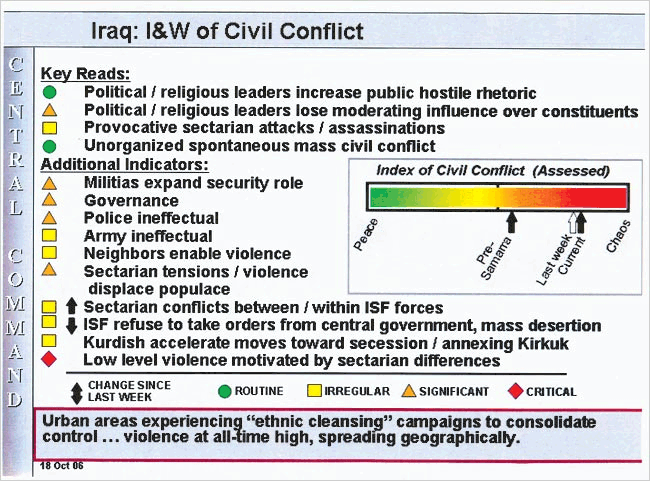
According to the New York Times, the "gauge" was shown as a slide at a classified briefing on October 18. Unfortunately for the benighted Iraqis, the gauge is moving steadily in the "wrong" direction: away from peace and into the "red zone" of chaos. So how is it that the Bush plan can be said to be working? Easy, if the plan is ... chaos. Asia Times Online columnist Spengler has pointed out that chaos is probably the best option for the Bush administration, not only in Iraq but in the region (see How I learned to stop worrying and love chaos, March 14, 2006, and Mistah Kurtz, he clueless, May 11, 2004). Mark LeVine writes (The chaos theory in action, April 6, 2004): "It is chaos that makes this whole [post-invasion Iraqi] system possible. Without the chaos, Iraqis would not allow the country to be sold off wholesale, or allow the US troops to remain after the June 30 'transfer' of sovereignty."
A strategy of fomenting chaos makes perfect sense in a twisted sort of way: a stable, autonomous Iraq means oil will be pumped, bringing down international crude prices, and that's the last thing the Bush administration's backers want.
Who are the administration's backers, and who has a hotline to the presidency, via Vice President Dick Cheney? Big Oil. Consider these well-known facts:
• Cheney was formerly chief executive officer of oil-services company Halliburton, which, incidentally, was found by a 2003 Pentagon audit to have overcharged the US government by US$61 million for delivering gasoline to Iraq.
Secretary of State Condoleezza Rice sat on Chevron's board of directors from 1991 to 2001, and Chevron named an oil tanker after her.
• James A Baker III, secretary of state for Bush's father and now "fixer" for the Bush family, has been appointed co-chair of the Iraq Study Group, charged with advising Bush Jr on future Iraq policy. His law firm, Baker Botts, was ranked by Who's Who Legal last year as "Global Oil and Gas Law Firm of the Year". His clients include the royal family of Organization of Petroleum Exporting Countries kingpin Saudi Arabia.
• Bush himself was a Texas oilman, though not a very successful one. Ever heard of Bush's company, Arbusto? Probably not. Arbusto was going busto before it eventually ended up in the hands of Harken Energy in 1986. Harken gave Bush a seat on the board, some stock options and a $120,000 consulting contract. The energy industry pumped $2.8 million into Bush's 2000 campaign.
• Consider too that oil-industry behemoth ExxonMobil this week announced third-quarter earnings of $10.49 billion, largely on the backs of US consumers paying high prices for oil. This is the second-biggest quarterly profit ever recorded by a publicly traded US company.
Better not brag about your plan before the elections, Mr President.
______________________________
Also - Saddam Hussein was sentenced to death today - prompting speculation about the verdict creating more chaos in Iraq.
The trial of Saddam Hussein was supposed to mark an important moment in a process of turning Iraq from dictatorship to the rule of law. However, it might turn out to be just another event in the catalogue of chaos that has engulfed the country.
And from Juan Cole:
The Daily Telegraph reports that the death verdict against Saddam Hussein announced Sunday has sharpened further Iraq's already parlous ethnic tensions. Shiites in Sadr City, once viciously repressed by Saddam, erupted in celebrations of joy, including celebratory fire. NBC news is reporting some protests by Sunnis in the capital.
Riverbend, from Iraq - Baghdad Burning - posted about the verdict as well, today.
...Iraq saw demonstrations against and for the verdict. The pro-Saddam demonstrators were attacked by the Iraqi army. This is how free our media is today: the channels that were showing the pro-Saddam demonstrations have been shut down. Iraqi security forces promptly raided them.Welcome to the new Iraq...

Zawra channel. The subtitle says: Baghdad: Zawra satellite channel has stopped broadcasting by order of the government.
It’s not about the man- presidents come and go, governments come and go. It’s the frustration of feeling like the whole country and every single Iraqi inside and outside of Iraq is at the mercy of American politics. It is the rage of feeling like a mere chess piece to be moved back and forth at will. It is the aggravation of having a government so blind and uncaring about their peoples needs that they don’t even feel like it’s necessary to go through the motions or put up an act. And it's the deaths. The thousands of dead and dying, with Bush sitting there smirking and lying about progress and winning in a country where every single Iraqi outside of the Green Zone is losing...
Friday, November 03, 2006
Stephen Wiltshire - Artistic Autistic Savant
I saw where someone posted these You Tube movies of Stephen Wiltshire. He was first noticed for his artistic/memory ability by the media (BBC) back in 1987 - when he was 13. This is the first I remember hearing about him. It is quite amazing - the drawing of cities from memory - from one 45 minute helicopter trip.
Stephen Wiltshire: The Human Camera
Stephen Wiltshire: The Human Camera
Stephen Wiltshire draws Tokyo from memory
The Stephen Wiltshire Gallery
Stephen Wiltshire: The Human Camera
Stephen Wiltshire: The Human Camera
Stephen Wiltshire draws Tokyo from memory
The Stephen Wiltshire Gallery
Iceberg Warnings near New Zealand
Huge icebergs near NZ
An armada of about 100 icebergs was just a few hundred kilometers from Southland last night, prompting warnings for shipping and raising the remote prospect of the first iceberg sighting from the mainland in decades.
The surprised Whenuapai-based crew of an Air Force Orion, on a routine southern patrol looking for illegal fishing, spotted the first of the icebergs about 260km south of Invercargill late yesterday morning.
The frigid flotilla was split into two groups of about 50 icebergs. One group stretched about 185km south, and the other was concentrated in a chunky, icy mass about 37km wide.
Air Force spokesman Squadron leader Glenn Davis said the largest iceberg was about 1.8km long, 1.3km wide, and towered about 120m above the choppy waters. Given 90 percent of an iceberg is underwater, that meant the largest was 1.2km high.
The icebergs were north-east of the Auckland Islands and south-east of Stewart Island, and were drifting slowly towards south-east New Zealand, Squadron Leader Davis said.
"It is not unexpected to see icebergs at this time of year, but the crew were slightly surprised to see them where they are now," Squadron Leader Davis said...
They were seen as far north as the Chatham Islands in the late 1800s, and were last seen from the mainland in 1931, from a beach near Dunedin, Dr Williams said.
An armada of about 100 icebergs was just a few hundred kilometers from Southland last night, prompting warnings for shipping and raising the remote prospect of the first iceberg sighting from the mainland in decades.
The surprised Whenuapai-based crew of an Air Force Orion, on a routine southern patrol looking for illegal fishing, spotted the first of the icebergs about 260km south of Invercargill late yesterday morning.
The frigid flotilla was split into two groups of about 50 icebergs. One group stretched about 185km south, and the other was concentrated in a chunky, icy mass about 37km wide.
Air Force spokesman Squadron leader Glenn Davis said the largest iceberg was about 1.8km long, 1.3km wide, and towered about 120m above the choppy waters. Given 90 percent of an iceberg is underwater, that meant the largest was 1.2km high.
The icebergs were north-east of the Auckland Islands and south-east of Stewart Island, and were drifting slowly towards south-east New Zealand, Squadron Leader Davis said.
"It is not unexpected to see icebergs at this time of year, but the crew were slightly surprised to see them where they are now," Squadron Leader Davis said...
They were seen as far north as the Chatham Islands in the late 1800s, and were last seen from the mainland in 1931, from a beach near Dunedin, Dr Williams said.
Pacific Anomalies
I had noticed stories about fish and seabirds dying - usually with no explanation known or given. This gives more of an explanation for some of those things..
Scientists investigate unusual ocean conditions along the U.S. West Coast
For two years in a row, ocean life along the U.S. West Coast has suffered from the delayed appearance of conditions that normally support a highly productive marine environment. Instead of the usual upwelling of cold, nutrient-rich waters along the coast during spring and summer, ocean conditions early in the year have been similar to those of an El Niño, with warm surface waters and low nutrient levels. The effects have rippled through the food web, reducing the amount of food available for fish, seabirds, and marine mammals.
...The normal upwelling of cold water in the California Current system is driven by wind patterns that push the top layer of warm water offshore, drawing cold, nutrient-rich deeper water to the surface. In 2005--and to a lesser degree in 2006--the spring onset of persistent winds favorable to upwelling was later than usual. Without the influx of nutrients from deep water, the typical springtime blooms of phytoplankton failed to materialize.
Phytoplankton are the "grasslands of the sea," the primary producers of food for the entire ecosystem. Zooplankton, such as the shrimplike krill, graze on the phytoplankton and are, in turn, food for larger animals. Kudela and other researchers were able to trace the effects of the 2005 warm water anomaly on phytoplankton, zooplankton, and animal life higher up the food chain.
...Kudela and his coauthors... found that the phytoplankton recovered quickly when the winds finally kicked in and upwelling began later in the year. But the animals that graze on the phytoplankton took much longer to respond.
"There seems to be a window of opportunity that was missed when the upwelling was delayed," Kudela said. "A key organism is the krill, because krill feed directly on the phytoplankton and they, in turn, are fed on by all kinds of other organisms, from fish and seabirds to whales. So if the krill are affected it has a huge impact."
Phytoplankton blooms are essential for the reproductive success of krill, said Baldo Marinovic...
"About a week after the eggs hatch, the larvae start feeding, and they can't survive if there are no phytoplankton. The adult krill can survive without the phytoplankton, but they won't reproduce," Marinovic said. "In 2005, the adult krill that had overwintered layed eggs in the spring, but the larvae didn't survive. This year we had a similar situation, although it wasn't as bad because we did have some degree of upwelling."
The krill population recovered later in the year, but by that time it was too late for many of the seabirds and other animals that depend on a springtime boom in the krill population. Scientists reported widespread seabird mortality and nesting failures.
In addition to lower productivity of phytoplankton, the warm water anomalies of 2005 and 2006 have also favored different species of phytoplankton, Kudela said. Single-celled algae called diatoms that tend to dominate in cold, productive waters were replaced by warm-water dinoflagellates that are often associated with "red tides."
"This year we monitored one of the largest red tides I've ever seen in Monterey Bay," Kudela said.
Scientists investigate unusual ocean conditions along the U.S. West Coast
For two years in a row, ocean life along the U.S. West Coast has suffered from the delayed appearance of conditions that normally support a highly productive marine environment. Instead of the usual upwelling of cold, nutrient-rich waters along the coast during spring and summer, ocean conditions early in the year have been similar to those of an El Niño, with warm surface waters and low nutrient levels. The effects have rippled through the food web, reducing the amount of food available for fish, seabirds, and marine mammals.
...The normal upwelling of cold water in the California Current system is driven by wind patterns that push the top layer of warm water offshore, drawing cold, nutrient-rich deeper water to the surface. In 2005--and to a lesser degree in 2006--the spring onset of persistent winds favorable to upwelling was later than usual. Without the influx of nutrients from deep water, the typical springtime blooms of phytoplankton failed to materialize.
Phytoplankton are the "grasslands of the sea," the primary producers of food for the entire ecosystem. Zooplankton, such as the shrimplike krill, graze on the phytoplankton and are, in turn, food for larger animals. Kudela and other researchers were able to trace the effects of the 2005 warm water anomaly on phytoplankton, zooplankton, and animal life higher up the food chain.
...Kudela and his coauthors... found that the phytoplankton recovered quickly when the winds finally kicked in and upwelling began later in the year. But the animals that graze on the phytoplankton took much longer to respond.
"There seems to be a window of opportunity that was missed when the upwelling was delayed," Kudela said. "A key organism is the krill, because krill feed directly on the phytoplankton and they, in turn, are fed on by all kinds of other organisms, from fish and seabirds to whales. So if the krill are affected it has a huge impact."
Phytoplankton blooms are essential for the reproductive success of krill, said Baldo Marinovic...
"About a week after the eggs hatch, the larvae start feeding, and they can't survive if there are no phytoplankton. The adult krill can survive without the phytoplankton, but they won't reproduce," Marinovic said. "In 2005, the adult krill that had overwintered layed eggs in the spring, but the larvae didn't survive. This year we had a similar situation, although it wasn't as bad because we did have some degree of upwelling."
The krill population recovered later in the year, but by that time it was too late for many of the seabirds and other animals that depend on a springtime boom in the krill population. Scientists reported widespread seabird mortality and nesting failures.
In addition to lower productivity of phytoplankton, the warm water anomalies of 2005 and 2006 have also favored different species of phytoplankton, Kudela said. Single-celled algae called diatoms that tend to dominate in cold, productive waters were replaced by warm-water dinoflagellates that are often associated with "red tides."
"This year we monitored one of the largest red tides I've ever seen in Monterey Bay," Kudela said.
Bush seen as a Threat to World Peace.
We all knew that - but here is a new poll. Plus the New York Times is reporting that the the Bush Administration had a website up with instructions on how to make an atom bomb - in Arabic. Meanwhile - Bush recently appointed a former ExxonMobil CEO, Lee Raymond, to lead an influential study to develop policy solutions to America’s energy crisis!
Way to go George! (NOT!!!)
British believe Bush is more dangerous than Kim Jong-il

(Some would say that Bush is worse than Bin Laden).
America is now seen as a threat to world peace by its closest neighbours and allies, according to an international survey of public opinion published today that reveals just how far the country's reputation has fallen among former supporters since the invasion of Iraq.
Carried out as US voters prepare to go to the polls next week in an election dominated by the war, the research also shows that British voters see George Bush as a greater danger to world peace than either the North Korean leader, Kim Jong-il, or the Iranian president, Mahmoud Ahmadinejad. Both countries were once cited by the US president as part of an "axis of evil", but it is Mr Bush who now alarms voters in countries with traditionally strong links to the US.
The survey has been carried out by the Guardian in Britain and leading newspapers in Israel (Haaretz), Canada (La Presse and Toronto Star) and Mexico (Reforma), using professional local opinion polling in each country.
It exposes high levels of distrust. In Britain, 69% of those questioned say they believe US policy has made the world less safe since 2001, with only 7% thinking action in Iraq and Afghanistan has increased global security....
______________________________
Way to go George! (NOT!!!)
British believe Bush is more dangerous than Kim Jong-il

(Some would say that Bush is worse than Bin Laden).
America is now seen as a threat to world peace by its closest neighbours and allies, according to an international survey of public opinion published today that reveals just how far the country's reputation has fallen among former supporters since the invasion of Iraq.
Carried out as US voters prepare to go to the polls next week in an election dominated by the war, the research also shows that British voters see George Bush as a greater danger to world peace than either the North Korean leader, Kim Jong-il, or the Iranian president, Mahmoud Ahmadinejad. Both countries were once cited by the US president as part of an "axis of evil", but it is Mr Bush who now alarms voters in countries with traditionally strong links to the US.
The survey has been carried out by the Guardian in Britain and leading newspapers in Israel (Haaretz), Canada (La Presse and Toronto Star) and Mexico (Reforma), using professional local opinion polling in each country.
It exposes high levels of distrust. In Britain, 69% of those questioned say they believe US policy has made the world less safe since 2001, with only 7% thinking action in Iraq and Afghanistan has increased global security....
______________________________
Global Collapse of Fishing by 2048...
...if the current trend continues and people do nothing to correct the problem. According to a new report published in Science Magazine:
Human-dominated marine ecosystems are experiencing accelerating loss of populations and species, with largely unknown consequences. We analyzed local experiments, long-term regional time series, and global fisheries data to test how biodiversity loss affects marine ecosystem services across temporal and spatial scales. Overall, rates of resource collapse increased and recovery potential, stability, and water quality decreased exponentially with declining diversity. Restoration of biodiversity, in contrast, increased productivity fourfold and decreased variability by 21%, on average. We conclude that marine biodiversity loss is increasingly impairing the ocean's capacity to provide food, maintain water quality, and recover from perturbations. Yet available data suggest that at this point, these trends are still reversible.
From the New York Times: Report Warns of ‘Global Collapse’ of Fishing
Twelve scientists from the United States, Canada, Sweden and Panama contributed to the work reported in Science today.
“We extracted all data on fish and invertebrate catches from 1950 to 2003 within all 64 large marine ecosystems worldwide,” they wrote. “Collectively, these areas produced 83 percent of global fisheries yields over the past 50 years.”
In an interview, Dr. Worm said, “We looked at absolutely everything — all the fish, shellfish, invertebrates, everything that people consume that comes from the ocean, all of it, globally.”
The researchers found that 29 percent of species had been fished so heavily or were so affected by pollution or habitat loss that they were down to 10 percent of previous levels, their definition of “collapse.”
This loss of biodiversity seems to leave marine ecosystems as a whole more vulnerable to overfishing and less able to recover from its effects, Dr. Worm said. It results in an acceleration of environmental decay, and further loss of fish.
Dr. Worm said he analyzed the data for the first time on his laptop while he was overseeing a roomful of students taking an exam. What he saw, he said, was “just a smooth line going down.” And when he extrapolated the data into the future “to see where it ends at 100 percent collapse, you arrive at 2048.”
“The hair stood up on the back of my neck and I said, ‘This cannot be true,’ ” he recalled. He said he ran the data through his computer again, then did the calculations by hand. The results were the same.
“I don’t have a crystal ball and I don’t know what the future will bring, but this is a clear trend,” he said. “There is an end in sight, and it is within our lifetimes.”
Dr. Worm said a number of steps could help turn things around.
Even something as simple as reducing the number of unwanted fish caught in nets set for other species would help, he said. Marine reserves would also help, he said, as would “doing away with horrendous overfishing where everyone agrees it’s a bad thing; or if we banned destructive fishing in the most sensitive habitats.”
Human-dominated marine ecosystems are experiencing accelerating loss of populations and species, with largely unknown consequences. We analyzed local experiments, long-term regional time series, and global fisheries data to test how biodiversity loss affects marine ecosystem services across temporal and spatial scales. Overall, rates of resource collapse increased and recovery potential, stability, and water quality decreased exponentially with declining diversity. Restoration of biodiversity, in contrast, increased productivity fourfold and decreased variability by 21%, on average. We conclude that marine biodiversity loss is increasingly impairing the ocean's capacity to provide food, maintain water quality, and recover from perturbations. Yet available data suggest that at this point, these trends are still reversible.
From the New York Times: Report Warns of ‘Global Collapse’ of Fishing
Twelve scientists from the United States, Canada, Sweden and Panama contributed to the work reported in Science today.
“We extracted all data on fish and invertebrate catches from 1950 to 2003 within all 64 large marine ecosystems worldwide,” they wrote. “Collectively, these areas produced 83 percent of global fisheries yields over the past 50 years.”
In an interview, Dr. Worm said, “We looked at absolutely everything — all the fish, shellfish, invertebrates, everything that people consume that comes from the ocean, all of it, globally.”
The researchers found that 29 percent of species had been fished so heavily or were so affected by pollution or habitat loss that they were down to 10 percent of previous levels, their definition of “collapse.”
This loss of biodiversity seems to leave marine ecosystems as a whole more vulnerable to overfishing and less able to recover from its effects, Dr. Worm said. It results in an acceleration of environmental decay, and further loss of fish.
Dr. Worm said he analyzed the data for the first time on his laptop while he was overseeing a roomful of students taking an exam. What he saw, he said, was “just a smooth line going down.” And when he extrapolated the data into the future “to see where it ends at 100 percent collapse, you arrive at 2048.”
“The hair stood up on the back of my neck and I said, ‘This cannot be true,’ ” he recalled. He said he ran the data through his computer again, then did the calculations by hand. The results were the same.
“I don’t have a crystal ball and I don’t know what the future will bring, but this is a clear trend,” he said. “There is an end in sight, and it is within our lifetimes.”
Dr. Worm said a number of steps could help turn things around.
Even something as simple as reducing the number of unwanted fish caught in nets set for other species would help, he said. Marine reserves would also help, he said, as would “doing away with horrendous overfishing where everyone agrees it’s a bad thing; or if we banned destructive fishing in the most sensitive habitats.”
Thursday, November 02, 2006
"The Thirteenth Tipping Point"
Denial.
...From Mother Jones
...A 2005 study by Anthony Leiserowitz, published in Risk Analysis, found that while most Americans are moderately concerned about global warming, the majority—68 percent—believe the greatest threats are to people far away or to nonhuman nature. Only 13 percent perceive any real risk to themselves, their families, or their communities. As Leiserowitz points out, this perception is critical, since Americans constitute only 5 percent of the global population yet produce nearly 25 percent of the global carbon dioxide emissions. As long as this dangerous and delusional misconception prevails, the chances of preventing Schellnhuber's 12 points from tipping are virtually nil.
So what will it take to trigger what we might call the 13th tipping point: the shift in human perception from personal denial to personal responsibility? Without a 13th tipping point, we can't hope to avoid global mayhem. With it, we can attempt to put into action what we profess: that we actually care about our children's and grandchildren's futures.
Science shows that we are born with powerful tools for overcoming our perilous complacency. We have the genetic smarts and the cultural smarts. We have the technological know-how. We even have the inclination. The truth is we can change with breathtaking speed, sculpting even "immutable" human nature. Forty years ago many people believed human nature required blacks and whites to live in segregation; 30 years ago human nature divided men and women into separate economies; 20 years ago human nature prevented us from defusing a global nuclear standoff. Nowadays we blame human nature for the insolvable hazards of global warming.
The 18th-century taxonomist Carolus Linnaeus named us Homo sapiens, from the Latin sapiens, meaning "prudent, wise." History shows we are not born with wisdom. We evolve into it.
...Since we already have our common enemy, global warming, perhaps we can bring it to life. Picture a fiery monster consuming our neighborhoods. It's big and scary yet vulnerable to the Lilliputian arrows each of us wields with personal lifestyle choices. However, the hybrid car is not enough. Wielding the big stick of consumer choice, we can batter the fiery monster more convincingly if we persuade the corporate world that we are serious and, collectively, powerful. We can buy or not buy. We can invest or not invest. Business can survive by becoming green and sustainable.
...THE NATURE OF TIPPING POINTS is that they happen dizzyingly fast. The good news is that history proves we are capable of keeping up. Social scientists once believed it would take decades of government pressure and education for Americans to choose smaller families, since the desire to procreate is an absolute part of the human animal, or so they thought. Yet population radically declined in the course of only three years in the 1970s—one woman at a time, without an ounce of government involvement. Harvard sociobiologist Edward O. Wilson calls the voluntary choice of women around the globe to limit their families an almost miraculous gift to future generations.
...The truth is, we can change, and change fast, even in the absence of perfect knowledge. Like cockroaches, our hallmark is adaptability. Long ago, we looked out from the trees and saw the savannas. Beyond the savannas we glimpsed other frontiers. History proves that when we behold a better world, we move toward it, leaving behind what no longer works.
...From Mother Jones
...A 2005 study by Anthony Leiserowitz, published in Risk Analysis, found that while most Americans are moderately concerned about global warming, the majority—68 percent—believe the greatest threats are to people far away or to nonhuman nature. Only 13 percent perceive any real risk to themselves, their families, or their communities. As Leiserowitz points out, this perception is critical, since Americans constitute only 5 percent of the global population yet produce nearly 25 percent of the global carbon dioxide emissions. As long as this dangerous and delusional misconception prevails, the chances of preventing Schellnhuber's 12 points from tipping are virtually nil.
So what will it take to trigger what we might call the 13th tipping point: the shift in human perception from personal denial to personal responsibility? Without a 13th tipping point, we can't hope to avoid global mayhem. With it, we can attempt to put into action what we profess: that we actually care about our children's and grandchildren's futures.
Science shows that we are born with powerful tools for overcoming our perilous complacency. We have the genetic smarts and the cultural smarts. We have the technological know-how. We even have the inclination. The truth is we can change with breathtaking speed, sculpting even "immutable" human nature. Forty years ago many people believed human nature required blacks and whites to live in segregation; 30 years ago human nature divided men and women into separate economies; 20 years ago human nature prevented us from defusing a global nuclear standoff. Nowadays we blame human nature for the insolvable hazards of global warming.
The 18th-century taxonomist Carolus Linnaeus named us Homo sapiens, from the Latin sapiens, meaning "prudent, wise." History shows we are not born with wisdom. We evolve into it.
...Since we already have our common enemy, global warming, perhaps we can bring it to life. Picture a fiery monster consuming our neighborhoods. It's big and scary yet vulnerable to the Lilliputian arrows each of us wields with personal lifestyle choices. However, the hybrid car is not enough. Wielding the big stick of consumer choice, we can batter the fiery monster more convincingly if we persuade the corporate world that we are serious and, collectively, powerful. We can buy or not buy. We can invest or not invest. Business can survive by becoming green and sustainable.
...THE NATURE OF TIPPING POINTS is that they happen dizzyingly fast. The good news is that history proves we are capable of keeping up. Social scientists once believed it would take decades of government pressure and education for Americans to choose smaller families, since the desire to procreate is an absolute part of the human animal, or so they thought. Yet population radically declined in the course of only three years in the 1970s—one woman at a time, without an ounce of government involvement. Harvard sociobiologist Edward O. Wilson calls the voluntary choice of women around the globe to limit their families an almost miraculous gift to future generations.
...The truth is, we can change, and change fast, even in the absence of perfect knowledge. Like cockroaches, our hallmark is adaptability. Long ago, we looked out from the trees and saw the savannas. Beyond the savannas we glimpsed other frontiers. History proves that when we behold a better world, we move toward it, leaving behind what no longer works.
"The internet as jellyfish"
I think this is an interesting visual analogy - jellyfish as the model of a complex system. Of course - jellyfish are fairly simple as far as life structures go - so it just goes to show you where people are at in the scheme of things. IOW - our complex systems are relatively basic.
Monster jellyfish? Mapping the global internet
By developing novel methods to map and model the internet, even visualising it as a jellyfish, the EVERGROW project is challenging conventional thinking and offering new insights into how best to route future network traffic...
The team clusters the shells outside the nucleus into two groups, according to their connectivity – one group being highly interconnected, and a second group consisting of isolated clusters which connect directly to the nucleus.
“We tend to draw pictures of it as a jellyfish,” enthuses Scott Kirkpatrick, EVERGROW scientific coordinator. “The largest, well-connected part is the outer mantle of the jellyfish, the little nucleus is the brain, and the tendrils hanging down are the least connected features that have to send their messages to the nucleus before being fed out.”
This novel analysis shows the nucleus of the internet as containing about 100 nodes, the highly connected mantle with about 15 thousand nodes, and the simple tendrils with the remaining five thousand.
“When we look at the composition of the nucleus, we find that it is international. There is about a one third, one third, one third distribution, between the European, North American and Far Eastern contributors,” notes Kirkpatrick....
Finally, Kirkpatrick stresses that this analytical method can be applied equally well to networks in other complex systems, such as cellular communications networks, power grids and national economies. “The numbers are different, but the three groups – the tendrils, the mantle and the nucleus of the jellyfish – all occur and seem to have the same roles.”
Monster jellyfish? Mapping the global internet
By developing novel methods to map and model the internet, even visualising it as a jellyfish, the EVERGROW project is challenging conventional thinking and offering new insights into how best to route future network traffic...
The team clusters the shells outside the nucleus into two groups, according to their connectivity – one group being highly interconnected, and a second group consisting of isolated clusters which connect directly to the nucleus.
“We tend to draw pictures of it as a jellyfish,” enthuses Scott Kirkpatrick, EVERGROW scientific coordinator. “The largest, well-connected part is the outer mantle of the jellyfish, the little nucleus is the brain, and the tendrils hanging down are the least connected features that have to send their messages to the nucleus before being fed out.”
This novel analysis shows the nucleus of the internet as containing about 100 nodes, the highly connected mantle with about 15 thousand nodes, and the simple tendrils with the remaining five thousand.
“When we look at the composition of the nucleus, we find that it is international. There is about a one third, one third, one third distribution, between the European, North American and Far Eastern contributors,” notes Kirkpatrick....
Finally, Kirkpatrick stresses that this analytical method can be applied equally well to networks in other complex systems, such as cellular communications networks, power grids and national economies. “The numbers are different, but the three groups – the tendrils, the mantle and the nucleus of the jellyfish – all occur and seem to have the same roles.”
A World of Color
Various sections of the bloggosphere (also here, and here) have been abuzz about the idea that Angelina Jolie is playing Mariane Pearl in the movie based on Mariane's book, A Mighty Heart. Some people see it as a bad thing, racist even. Some people don't. The idea is that Angelina Jolie is white and Mariane Pearl is.... not...
A lot of this has to do with identity. Angelina Jolie could self identify as a woman of color if she wished. (She is included here) with other multiracial people. Her mother, Marcheline Bertrand, was born to a Québécois father and an Indigenous (Iroquois) mother. Her father is a Czechoslovakian-American. Meanwhile Mariane Pearl was born in France to a Dutch father and to an Afro-Chinese Cuban mother. Here is an article that Mariane wrote about her mother (and her background), The woman who gave me my strength.
One argument goes: "Whiteness is a system of dominant power---not an ethnicity, since being white is about rejecting one's ethnicity---and those who are excluded from that system (people of color) have no access to that power. That is what it means to be white---to be dominant on all institutional levels over POC."
Mariane Pearl has fairly recent ancestors from 4 continents. She has devoted her life to bringing understanding of different people to people across the globe. She has stories on women of color from around the world who are working against adversity - sometimes against the patriarchy. (See Global diary...Liberia, Global diary...Cuba, Global diary...Cambodia). Is she rejecting her ethnicity? If so - which one? If she harnesses the power of Hollywood and the media - is not she - a person of color - accessing that power? Is that supposed to be good or bad?
She has her articles in Glamour. They are sure to get an audience of people who have bought into the stereotypes created by the dominant culture. It's where the money is. The same with this movie. It seems like a duel purpose movie - one being some amount of global human understanding - the other - for the movie to succeed in the dominant culture.
To be a part of the dominant power system - it's easier if you think that the dominant power system is a good thing. It may be that "being white" (as some define it) is to identify with the dominant culture - the more one identifies with it - and is determined to succeed in it - the more one becomes a part of that power system. It is easier to have that identity if you look like other successful people. Hence - the argument to have an actual French speaking northern European/Cuban (in this case - Cuban means Latino/Afro/Asian) person play the part.
For more and more people - race is not clear cut thing - if it ever was. I think that there is a lot of good in that. Halle Berry (who a lot of people were advocating for the part because of her black and white background) said, "...why should it matter what color anyone is or what heritage they identify with? If people would just learn to look at everyone equally and stop trying to label one another the issue of what we are all made of would be null and void...We are all members of the same race, the HUMAN RACE!".
 I expect that the last thing that Mariane Pearl wanted was for everyone to be dissecting what all haplogroups she belongs to. That seems to be the emphasis that some have put on it - regardless of her ethnic or other identity (and some only see it as a black and white question).
Is Mariane rejecting her ethnicity - or is she embracing them all? Were any French speaking, Caucasian/Cubans considered for the part? Is it about access or is it about money? Is it a matter of the producer giving the role to his partner in life - regardless of her heritage? Is Mariane happy about it? Is Mariane Pearl a good role model for others? Maybe - maybe, probably not, both, probably, yes, yes and no - it would definitely have sent a more positive message to young people of color to see someone who really did have a Caucasian/Cuban or European/Latino heritage to see the part go to someone who reflected that culture. As it is - the movie creates the illusion of someone with a partially Latino background - and for some - that isn't enough.
A lot of this has to do with identity. Angelina Jolie could self identify as a woman of color if she wished. (She is included here) with other multiracial people. Her mother, Marcheline Bertrand, was born to a Québécois father and an Indigenous (Iroquois) mother. Her father is a Czechoslovakian-American. Meanwhile Mariane Pearl was born in France to a Dutch father and to an Afro-Chinese Cuban mother. Here is an article that Mariane wrote about her mother (and her background), The woman who gave me my strength.
One argument goes: "Whiteness is a system of dominant power---not an ethnicity, since being white is about rejecting one's ethnicity---and those who are excluded from that system (people of color) have no access to that power. That is what it means to be white---to be dominant on all institutional levels over POC."
Mariane Pearl has fairly recent ancestors from 4 continents. She has devoted her life to bringing understanding of different people to people across the globe. She has stories on women of color from around the world who are working against adversity - sometimes against the patriarchy. (See Global diary...Liberia, Global diary...Cuba, Global diary...Cambodia). Is she rejecting her ethnicity? If so - which one? If she harnesses the power of Hollywood and the media - is not she - a person of color - accessing that power? Is that supposed to be good or bad?
She has her articles in Glamour. They are sure to get an audience of people who have bought into the stereotypes created by the dominant culture. It's where the money is. The same with this movie. It seems like a duel purpose movie - one being some amount of global human understanding - the other - for the movie to succeed in the dominant culture.
To be a part of the dominant power system - it's easier if you think that the dominant power system is a good thing. It may be that "being white" (as some define it) is to identify with the dominant culture - the more one identifies with it - and is determined to succeed in it - the more one becomes a part of that power system. It is easier to have that identity if you look like other successful people. Hence - the argument to have an actual French speaking northern European/Cuban (in this case - Cuban means Latino/Afro/Asian) person play the part.
For more and more people - race is not clear cut thing - if it ever was. I think that there is a lot of good in that. Halle Berry (who a lot of people were advocating for the part because of her black and white background) said, "...why should it matter what color anyone is or what heritage they identify with? If people would just learn to look at everyone equally and stop trying to label one another the issue of what we are all made of would be null and void...We are all members of the same race, the HUMAN RACE!".
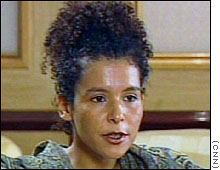 I expect that the last thing that Mariane Pearl wanted was for everyone to be dissecting what all haplogroups she belongs to. That seems to be the emphasis that some have put on it - regardless of her ethnic or other identity (and some only see it as a black and white question).
 Is Mariane rejecting her ethnicity - or is she embracing them all? Were any French speaking, Caucasian/Cubans considered for the part? Is it about access or is it about money? Is it a matter of the producer giving the role to his partner in life - regardless of her heritage? Is Mariane happy about it? Is Mariane Pearl a good role model for others? Maybe - maybe, probably not, both, probably, yes, yes and no - it would definitely have sent a more positive message to young people of color to see someone who really did have a Caucasian/Cuban or European/Latino heritage to see the part go to someone who reflected that culture. As it is - the movie creates the illusion of someone with a partially Latino background - and for some - that isn't enough.
Wednesday, November 01, 2006
100 New Species Found - Hawaiian Archipelago
Hawaii atoll trip IDs 100 new species
 'Acetabularia sp. parvula, a one-celled algae, was found at French Frigate Shoals.'
Researchers have discovered what appear to be more than 100 new species of marine animals on a three-week voyage to French Frigate Shoals, officials said yesterday.
Crabs, corals, sea cucumbers, sea squirts, worms, sea stars, snails and clams were among the unusual-looking samples collected by researchers aboard the National Oceanic and Atmospheric Administration's Oscar Elton Sette from this part of the Northwestern Hawaiian Islands Marine National Monument.
Among the finds of the voyage that returned to Honolulu on Sunday were a photogenic hermit crab that wears a sea anemone around its neck like a medallion and has shiny golden claws.
Unlike previous research, which focused on "the big stuff" like sharks, fish, sea turtles and Hawaiian monk seals, this trip targeted no-backbone creatures just a few inches in size or smaller.
The international crew of experts will compile their research as part of the Census of Marine Life, a worldwide project to document the biological diversity of various parts of the world's oceans....
And while the group was finding handfuls of apparent new species daily, some surprises were what it didn't find, said principal investigator Rusty Brainard, chief of the Coral Reef Ecosystem Division of NOAA's Pacific Islands Fishery Science Center.
For example, Christmas tree worms and porcelain crabs, both common residents of coral reefs in the Main Hawaiian Islands and many other places in the world, weren't seen at all, Brainard said...
"This is a trip I've been waiting to take for four years," Godwin said. "A lot of us are interested in saving coral reefs and determining what makes them tick."
To do that, he said, you've first got to know what's living there.
Also - on the web:
Northwestern Hawaiian Islands Multi-Agency Education Project » www.hawaiianatolls.org
The Census of Marine Life » www.coml.org
 'Acetabularia sp. parvula, a one-celled algae, was found at French Frigate Shoals.'
Researchers have discovered what appear to be more than 100 new species of marine animals on a three-week voyage to French Frigate Shoals, officials said yesterday.
Crabs, corals, sea cucumbers, sea squirts, worms, sea stars, snails and clams were among the unusual-looking samples collected by researchers aboard the National Oceanic and Atmospheric Administration's Oscar Elton Sette from this part of the Northwestern Hawaiian Islands Marine National Monument.
Among the finds of the voyage that returned to Honolulu on Sunday were a photogenic hermit crab that wears a sea anemone around its neck like a medallion and has shiny golden claws.
Unlike previous research, which focused on "the big stuff" like sharks, fish, sea turtles and Hawaiian monk seals, this trip targeted no-backbone creatures just a few inches in size or smaller.
The international crew of experts will compile their research as part of the Census of Marine Life, a worldwide project to document the biological diversity of various parts of the world's oceans....
And while the group was finding handfuls of apparent new species daily, some surprises were what it didn't find, said principal investigator Rusty Brainard, chief of the Coral Reef Ecosystem Division of NOAA's Pacific Islands Fishery Science Center.
For example, Christmas tree worms and porcelain crabs, both common residents of coral reefs in the Main Hawaiian Islands and many other places in the world, weren't seen at all, Brainard said...
"This is a trip I've been waiting to take for four years," Godwin said. "A lot of us are interested in saving coral reefs and determining what makes them tick."
To do that, he said, you've first got to know what's living there.
Also - on the web:
Northwestern Hawaiian Islands Multi-Agency Education Project » www.hawaiianatolls.org
The Census of Marine Life » www.coml.org
Meridional Overturning Circulation
From the BBC: Ocean array acts as climate alert

Underwater instruments measuring the temperature and salinity of seawater will detect any change to currents that regulate Europe's climate, they said.
A UK-led team of researchers said the data offered the most detailed picture of the ocean's circulation patterns.
The first set of results were presented at a climate conference in Birmingham.
The array of 19 "moorings" is positioned at points 26.5 degrees north in the Atlantic Ocean, providing an insight to the Meridional Overturning Circulation (MOC) that acts as the Earth's "heat pump", distributing heat via the ocean from the equator to northern regions.
By the time it reaches the northern latitudes around Greenland and Iceland, the water has cooled so much that it sinks towards the ocean's floor and heads south again, a process known as "overturning".
The process is density driven, so is sensitive to changes in the temperature and salinity of the water.
Computer climate models predict that the overturning may weaken or switch off altogether as freshwater from melting ice sheets flow into the sea...
"The ice core records suggest sudden warming or cooling happen on a scale of about a decade. The timescale for temperature change, which are in the order of 5-10C (9-18F), also happen in about a 10-year period," he explained.
This article states that the Gulfstream came to a halt for 10 days in 2004:Sea change: why global warming could leave Britain feeling the cold
See also (from the Guardian): Gulf Stream Interactive
Underwater instruments measuring the temperature and salinity of seawater will detect any change to currents that regulate Europe's climate, they said.
A UK-led team of researchers said the data offered the most detailed picture of the ocean's circulation patterns.
The first set of results were presented at a climate conference in Birmingham.
The array of 19 "moorings" is positioned at points 26.5 degrees north in the Atlantic Ocean, providing an insight to the Meridional Overturning Circulation (MOC) that acts as the Earth's "heat pump", distributing heat via the ocean from the equator to northern regions.
By the time it reaches the northern latitudes around Greenland and Iceland, the water has cooled so much that it sinks towards the ocean's floor and heads south again, a process known as "overturning".
The process is density driven, so is sensitive to changes in the temperature and salinity of the water.
Computer climate models predict that the overturning may weaken or switch off altogether as freshwater from melting ice sheets flow into the sea...
"The ice core records suggest sudden warming or cooling happen on a scale of about a decade. The timescale for temperature change, which are in the order of 5-10C (9-18F), also happen in about a 10-year period," he explained.
This article states that the Gulfstream came to a halt for 10 days in 2004:Sea change: why global warming could leave Britain feeling the cold
See also (from the Guardian): Gulf Stream Interactive
Subscribe to:
Posts (Atom)